![]() |
|
![]() |
![]() |
|
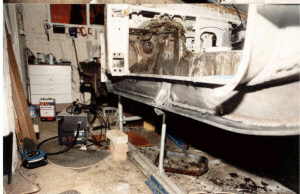
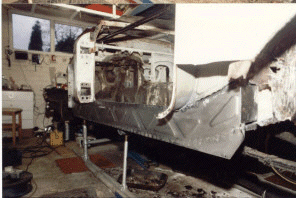
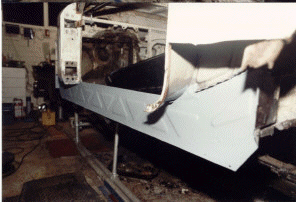
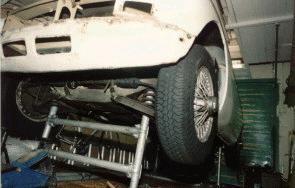
1. The Project re-commences at the new address. The first job was to support the shell on a frame work of galvanized steel tube. |
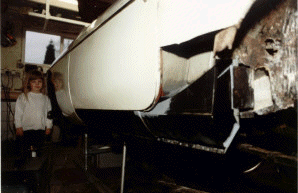
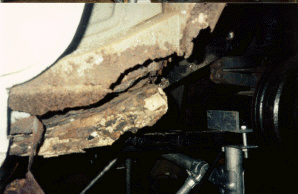
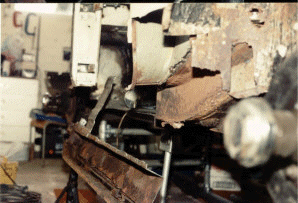
2. After removing the lower section of the rear wing, the condition of the old sill panels can be seen. |
![]() |
![]() |
|
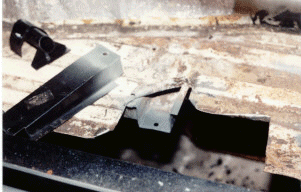
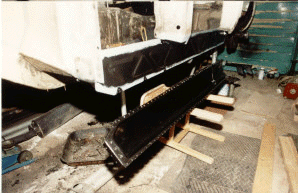
3. After removing the outer and inner sill panels, most of the old inner-inner step sill was also removed. |
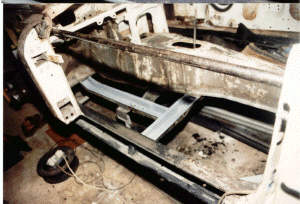
4. To help keep the shell in shape the amount of old metal cut out was always kept to a minimum. Here the old floor is cut back in preparation for the installation of a new crossmember repair panel. |
![]() |
![]() |
|
5. With the new inner-inner sill, castle section and cross member repaired the remaining floor was removed. The 25mm steel tube spanning the door gap was fitted to keep the shell in shape. |
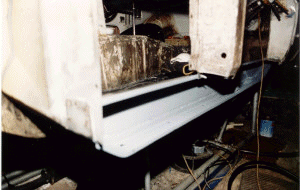
6. The castle section and sill jacking point reinforcing panel welded into place. Supports added to the tube frame helped to maintain the correct alignment and distance between the sill panels during fitting. |
![]() |
![]() |
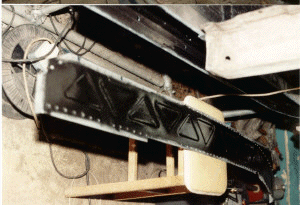
| 7. Inner-inner sill and castle section painted with zinc primer. | 8. Hammerite paint applied prior to fitting inner membrane sill panel. |
![]() |
![]() |
| 9. Inner sill painted and drilled ready for fitting. | 10. Inner sill panel temporary fitted using self tappers followed by plug welding with a mig welder. |
![]() |
![]() |
| 11. The inner sill panel prepared for primer. | 12. Inner sill primed. |
![]() |
![]() |
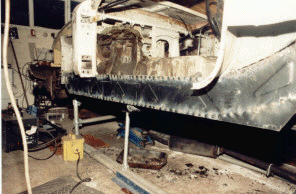
| 13. Outer sill panel painted with hammerite and hole punched ready for plug welding. Holes were made using a joggler/punch tool from Machine Mart. (See link below) | 14. The door and front wing were temporarily re-fitted to aid alignment before welding the outer sill in place. |
|
Copyright 2001-2006 |
|